The Lot is particularly rich in wild orchids, with 48 species recorded in the département. Many grow on the limestone causses, in woodland and along roadsides and paths. I’m particularly fond of wild orchids, and over the years I’ve photographed quite a few different species. Almost all here were found either on our land or on walks in the area, with just one or two from further afield on our walks in France. I’ve brought the photographs together here, with a little information about each orchid.
Contents
Bee Orchid · Broad-leaved Helleborine · Broad-leaved Marsh Orchid · Burnt-tip Orchid · Common Spotted Orchid · Common Twayblade · Early Purple Orchid · Early Spider Orchid · Elder-flowered Orchid · Fly Orchid · Fragrant Orchid · Giant Orchid · Greater Butterfly Orchid · Green-winged Orchid · Lady Orchid · Lizard Orchid · Man Orchid · Military Orchid · Monkey Orchid · Narrow-leaved Helleborine · Pyramidal Orchid · Red Helleborine · Tongue Orchid · Violet Bird’s-nest Orchid · Woodcock Orchid
Bee Orchid
Ophrys apifera
French: Ophrys abeille


Flowering: mainly May to July
Habitat: calcareous grassland, roadside verges, woodland edges, quarries and other open ground.
The Bee Orchid is one of the most distinctive of the Ophrys orchids. The large velvety lip resembles a bee, while the outer parts of the flower are usually pink. It can be found in grassland, on verges and in other open places, particularly on calcareous soils.
Broad-leaved Helleborine
Epipactis helleborine
French: Épipactis à larges feuilles


Flowering: July to September
Habitat: mainly woodland and woodland edges, particularly in shady or partly shaded places.
Broad-leaved Helleborine is a tall orchid with broad leaves and a loose spike of greenish-purple flowers. It is quite variable in colour and can sometimes be overlooked because the flowers are less showy than those of many other orchids.
Broad-leaved Marsh Orchid
Dactylorhiza majalis
French: Dactylorhize à larges feuilles


Flowering: May to July
Habitat: damp meadows, marshy grassland and other wet places.
The Broad-leaved Marsh Orchid is a sturdy orchid with a dense spike of pink to purple flowers and broad, often spotted leaves. It is usually found in damp ground and wet meadows, where it can sometimes grow in large groups.
Burnt-tip Orchid
Neotinea ustulata
French: Orchis brûlé
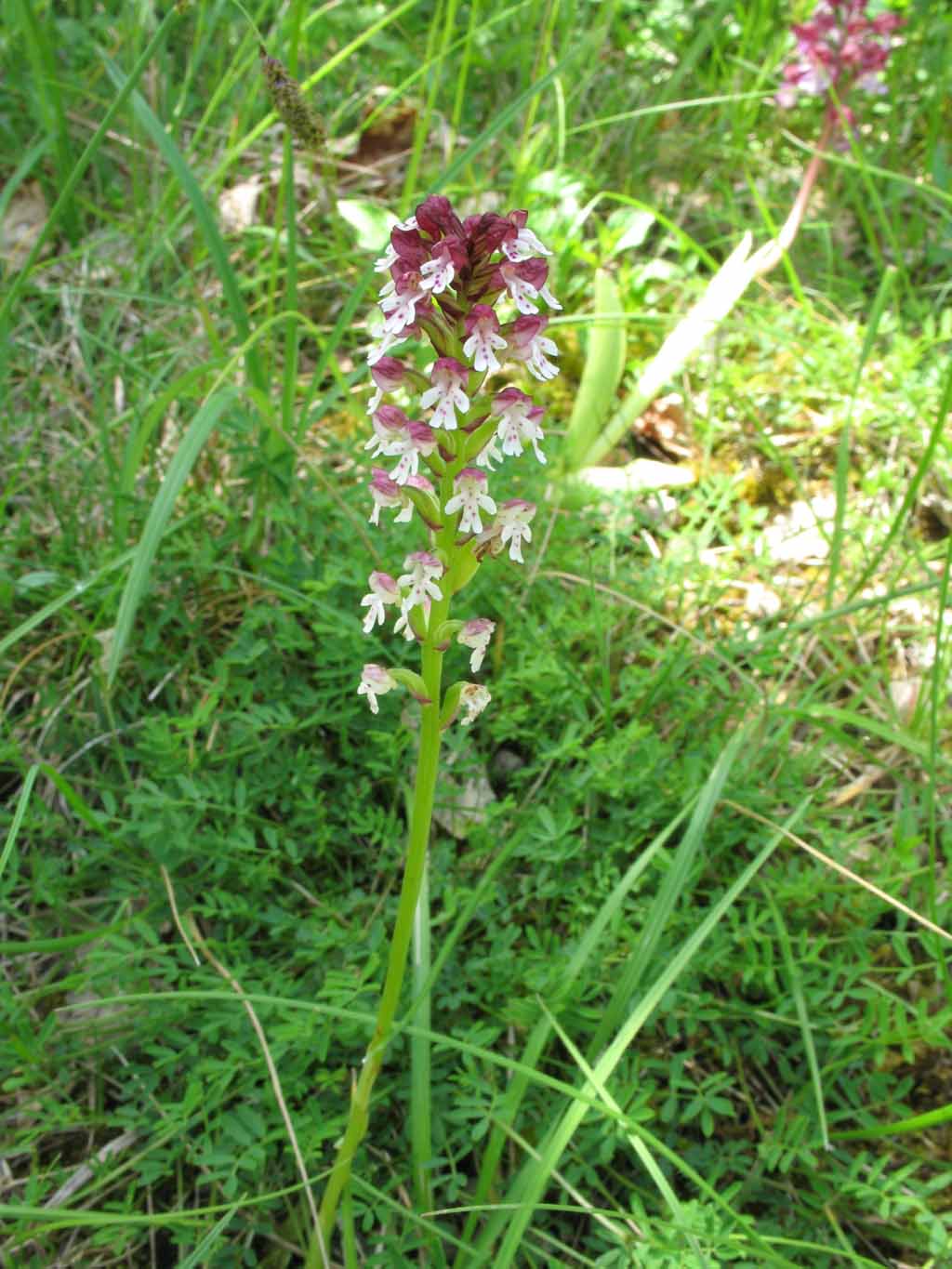


Flowering: May to June
Habitat: dry grassland, meadows and open slopes, usually on chalky or limestone soils.
The Burnt-tip Orchid gets its name from the dark reddish-purple tops of the unopened flower buds, which look as if they have been scorched. The open flowers are small, pale and closely packed into a dense spike.
Common Twayblade
Neottia ovata
French: Listère à feuilles ovales

Flowering: May to July
Habitat: woodland, scrub, hedgerows and damp grassland, often in partly shaded places.
The Common Twayblade is a rather understated orchid, with two broad leaves opposite each other on the stem and a loose spike of small green flowers. It is easy to overlook, but quite distinctive once you know what to look for.
Early Purple Orchid
Orchis mascula
French: Orchis mâle

Flowering: April to June
Habitat: woodland, woodland edges, meadows and grassy banks, often on limestone soils.
The Early Purple Orchid is one of the first orchids to flower in spring. It usually has a dense spike of purple flowers and broad leaves that are often marked with dark spots.
Early Spider Orchid
Ophrys sphegodes subsp. araneola
French: Ophrys petite araignée

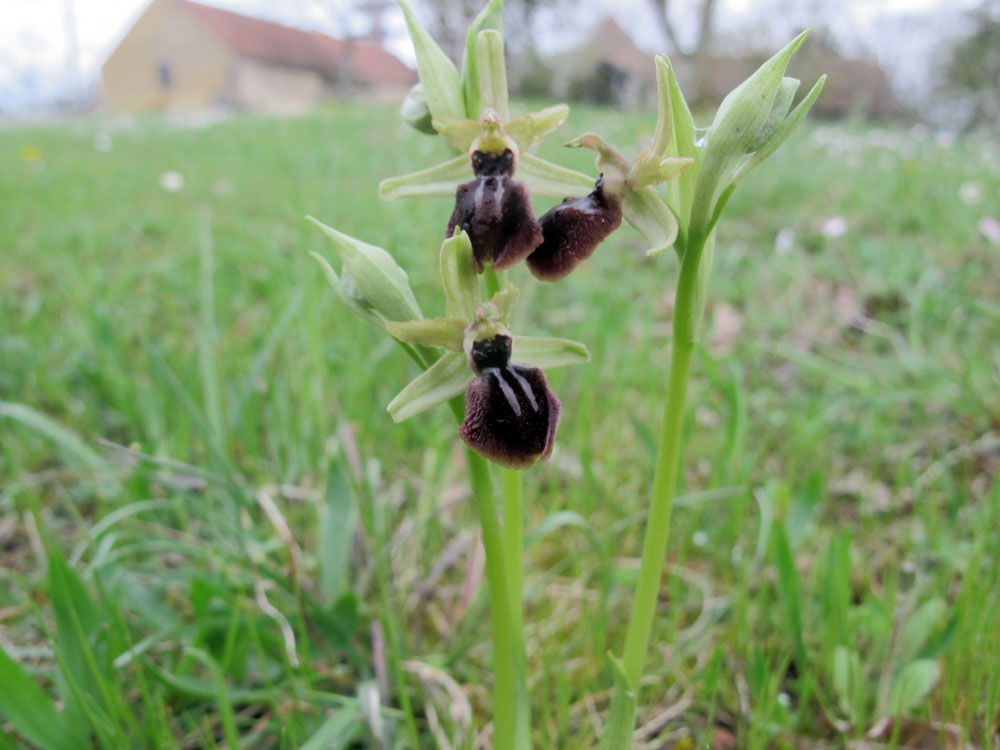

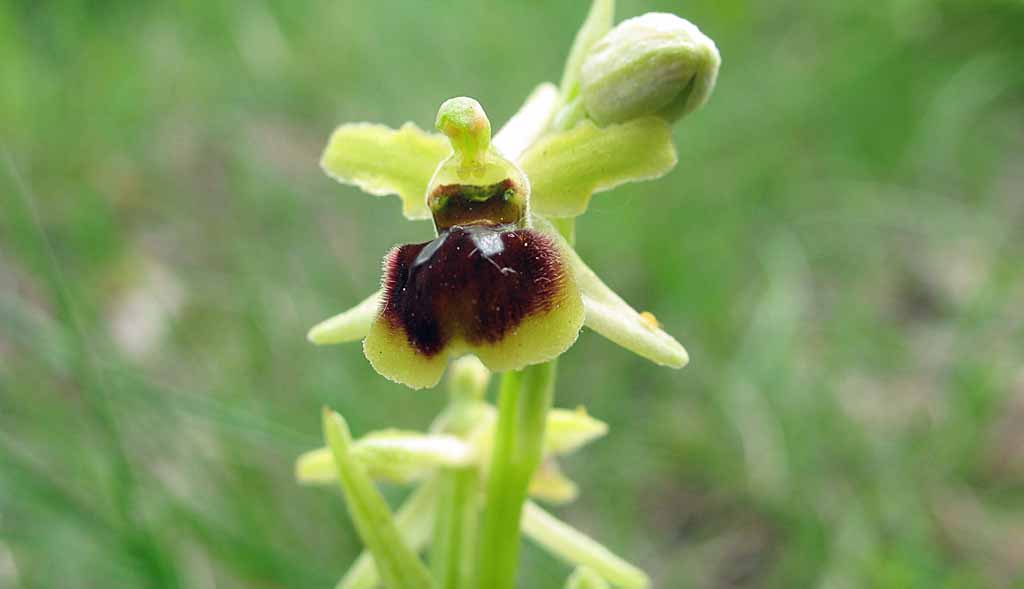
Flowering: March to May
Habitat: dry grassland, open scrub, roadside banks and other sunny places, often on limestone soils.
The Early Spider Orchid is a small Ophrys with green sepals and a dark brown, velvety lip marked with a paler pattern. It flowers quite early in the year and can be easy to miss among short spring vegetation.
Elder-flowered Orchid
Dactylorhiza sambucina
French: Orchis sureau


Flowering: April to June
Habitat: mountain meadows, open grassland and woodland clearings.
The Elder-flowered Orchid occurs in both yellow and reddish-purple forms, sometimes growing together. It is mainly a mountain species and gets its name from the faint elder-like scent of its flowers.
Where we found it: Cévennes National Park.
Fly Orchid
Ophrys insectifera
French: Ophrys mouche


Flowering: May to July
Habitat: open woodland, woodland edges, scrub and calcareous grassland.
The Fly Orchid has small, rather delicate flowers with a dark brown velvety lip and narrow green sepals. Like other Ophrys orchids, its flowers mimic an insect, in this case resembling a fly.
Fragrant Orchid
Gymnadenia conopsea
French: Orchis moucheron

Flowering: June to August
Habitat: grassland, meadows and open slopes, particularly on limestone soils.
The Fragrant Orchid has a slender spike of pink to purple flowers and can form quite dense flower spikes. It is named for its sweet scent, which is often strongest in warm weather.
Giant Orchid
Himantoglossum robertianum
French: Orchis géant

Flowering: January to April
Habitat: open grassland, scrub, roadsides and rocky slopes, especially in warm Mediterranean areas.
The Giant Orchid is one of the earliest orchids to flower and, as its name suggests, can grow to an impressive size. It has a thick stem and a dense spike of pinkish-purple and green flowers.
Where we found it: Les Alpilles, Provence.
Greater Butterfly Orchid
Platanthera chlorantha
French: Platanthère verdâtre


Flowering: May to July
Habitat: woodland, woodland edges, meadows and open grassland.
The Greater Butterfly Orchid has tall spikes of pale greenish-white flowers with long spurs. It is particularly attractive in the evening, when the flowers become more noticeable and release their scent.
Green-winged Orchid
Anacamptis morio
French: Orchis bouffon


Flowering: April to June
Habitat: unimproved grassland, meadows and open grassy slopes.
The Green-winged Orchid has a short, dense spike of flowers that vary from deep purple to pink and occasionally white. The green veins on the hood formed by the sepals give the orchid its English name.
Lady Orchid
Orchis purpurea
French: Orchis pourpre


Flowering: April to June
Habitat: open woodland, woodland edges, scrub and calcareous grassland.
The Lady Orchid is a large and striking orchid, with a dense flower spike and a dark purple hood above a pale lip marked with purple spots. Mature plants can be quite tall and conspicuous.
Lizard Orchid
Himantoglossum hircinum
French: Orchis bouc


Flowering: May to July
Habitat: dry grassland, roadside banks, scrub and open ground, usually on limestone soils.
The Lizard Orchid is a tall, distinctive species with unusual greenish flowers and very long, twisted lips. It can also have a strong smell, which explains its French name, Orchis bouc — the Goat Orchid.
Man Orchid (also Hanging Man Orchid)
Orchis anthropophora
French: Orchis homme-pendu


Flowering: April to June
Habitat: dry calcareous grassland, open scrub and sunny slopes.
The Man Orchid gets its name from the shape of the flower, whose long narrow lip resembles a tiny hanging figure. Its flowers are usually yellow-green, sometimes tinged with red or brown.
Military Orchid
Orchis militaris
French: Orchis militaire


Flowering: April to June
Habitat: calcareous grassland, open woodland, woodland edges and scrub.
The Military Orchid has a dense spike of pale pink to purple flowers. The hood formed by the upper parts of the flower resembles a small helmet, which gives the orchid its name.
Monkey Orchid
Orchis simia
French: Orchis singe


Flowering: April to June
Habitat: dry grassland, open woodland, scrub and sunny limestone slopes.
The Monkey Orchid gets its name from the shape of the flower, whose long narrow lobes resemble the arms and legs of a tiny monkey. The flowers are usually pale pink with darker purple markings.
Narrow-leaved Helleborine
Cephalanthera longifolia
French: Céphalanthère à longues feuilles


Flowering: April to June
Habitat: woodland, woodland edges and shaded banks, often on limestone soils.
The Narrow-leaved Helleborine does not obviously look like an orchid. It has slender leaves and elegant white flowers arranged along an upright stem. The flowers usually open only partly, giving the plant a rather delicate appearance.
Pyramidal Orchid
Anacamptis pyramidalis
French: Orchis pyramidal


Flowering: June to August
Habitat: dry grassland, roadside banks, open slopes and other sunny places, usually on limestone soils.
The Pyramidal Orchid is easy to recognise from its dense, cone-shaped flower head, which becomes more rounded as the flowers open. The flowers are usually bright pink or purple, though paler forms also occur.
Red Helleborine
Cephalanthera rubra
French: Céphalanthère rouge


Flowering: June to August
Habitat: woodland and woodland edges, especially on warm, calcareous soils.
The Red Helleborine is an elegant woodland orchid with deep pink to reddish-purple flowers. It is usually found in light woodland and can be quite localised.
Common Spotted Orchid
Dactylorhiza maculata group
French: Dactylorhize tacheté


Flowering: May to July
Habitat: damp grassland, meadows, heathland and woodland edges.
Spotted Orchids can be difficult to identify precisely because several closely related species look very similar. They usually have pink to purple flowers marked with darker spots and lines, but they can vary considerably in colour, from deep pink-purple to very pale formsand the leaves are often spotted as well.
Tongue Orchid
Serapias lingua
French: Sérapias langue


Flowering: April to June
Habitat: grassland, open scrub and other sunny places, often in Mediterranean areas.
The Tongue Orchid gets its name from the long reddish-purple lip that projects from the flower like a tongue. The flowers are quite distinctive, with a hood formed by the upper petals and sepals.
Where we found them: The first and third were found locally. The middle orchid we found at Henday, Pays Basque.
Violet Bird’s-nest Orchid
Limodorum abortivum
French: Limodore à feuilles avortées


Flowering: May to July
Habitat: open woodland, woodland edges and scrub, usually on dry calcareous soils.
The Violet Bird’s-nest Orchid is an unusual species with a tall purple stem and very small reduced leaves. It contains little chlorophyll and depends heavily on fungi in the soil for nutrients, which gives it a very different appearance from most other orchids.
Woodcock Orchid
Ophrys scolopax
French: Ophrys bécasse

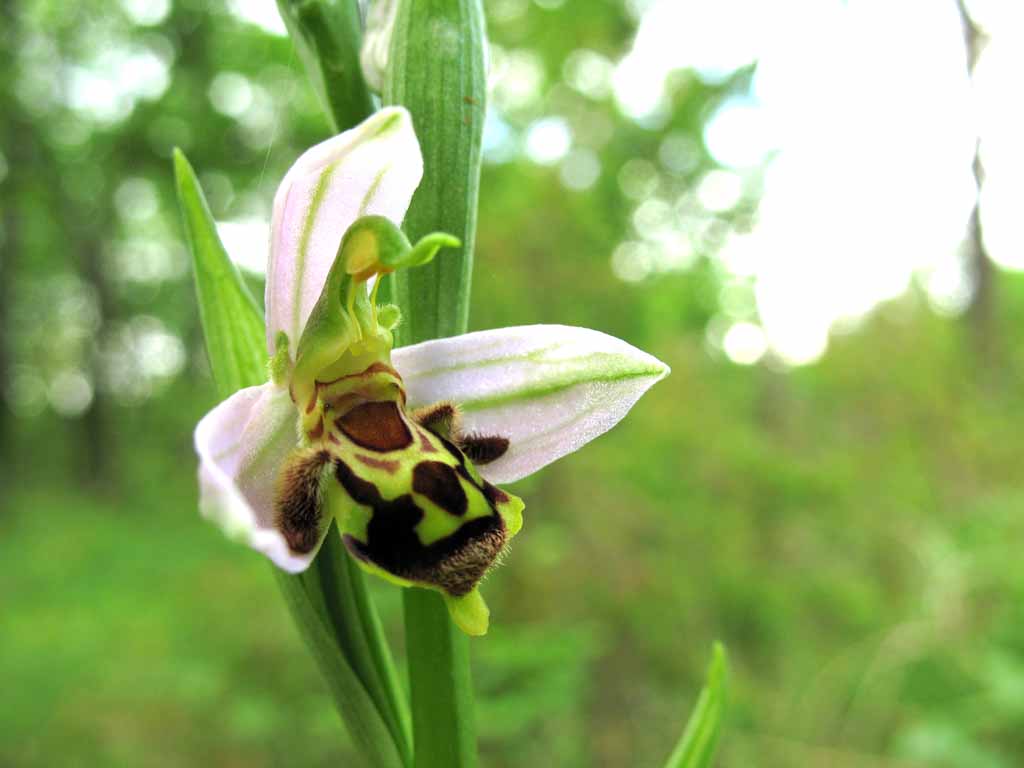

Flowering: April to June
Habitat: dry grassland, scrub, open woodland and sunny slopes, usually on limestone soils.
The Woodcock Orchid is one of the Ophrys orchids whose flowers resemble insects. It can look quite similar to the Bee Orchid, especially at first glance, as both have pink sepals and a dark, patterned lip.
A useful difference is the shape of the lip. In the Woodcock Orchid it is usually more elongated and often has a small pointed tip, while the Bee Orchid tends to have a broader, rounder lip. The markings on the lip also differ, though both species can vary quite a lot from plant to plant.